

Case · Electricity / Industry
Let the distribution box decide what happens in the trench.
Temperature, oxygen, and water-impregnated sensors are attached to the control terminals in the distribution tanks; to the threshold, automatically ventilated, pumped, and boarded. Automatically, in parallel with the manual mode, all actions are recorded.
The main graphic of this page
Two screens: the board above, the scenery in the ditch.
This page does not show a schematic. It's a real console and a live photo -- because the most convincing thing about this project is that it's really running.
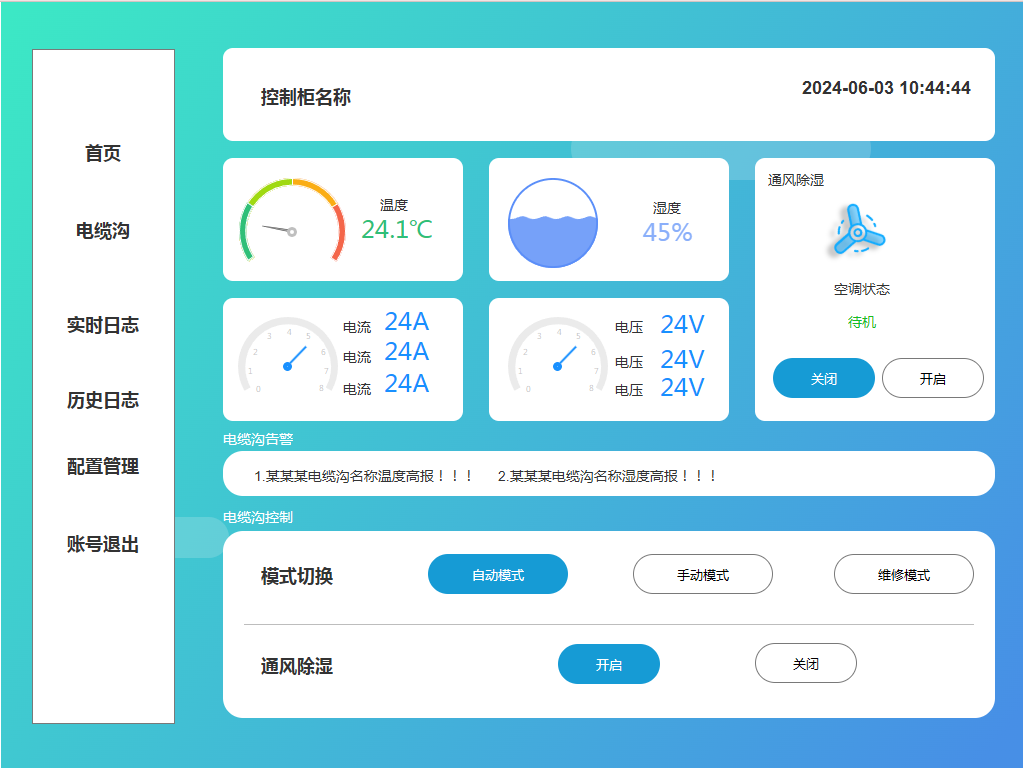
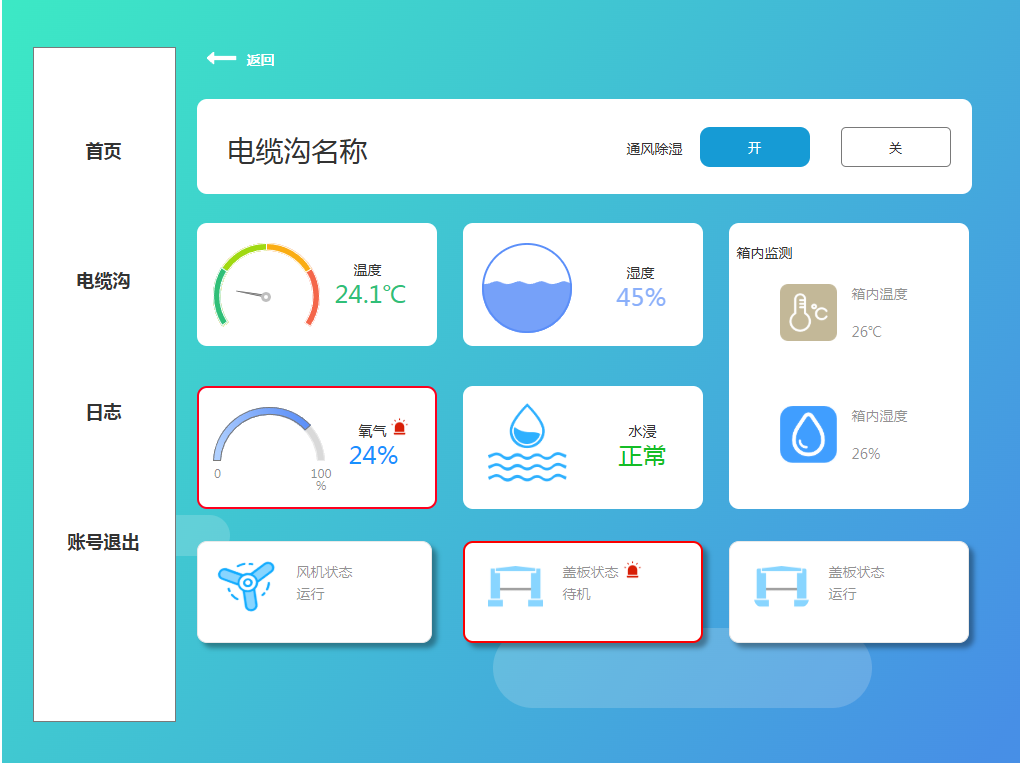
The picture contains information on the customer' s site, which must be authorized and labelled before being published.The three models on this page are the real design difficulties of the project: to move automatically, to stop manually.
How?
Four steps, from installing sensors to keeping records.
On-site construction and the rule-making configuration are two dials, and the intersection must be written to death.
Field survey
Determination of the number of ditches, sensor points, wind machines and pumps.
Install & Connect
Terminals enter electrical distribution tanks, sensors are connected to the implementing agency and power self-inspection is done.
Configure thresholds
Sets a high and low threshold, delay and connection order by groove.
Test-run and interface
The two models run in one round, and the logs are checked and handed over.
Delivery and boundary
What did you give me? Nothing.
With regard to the electrical environment, construction and acceptance must be done in a qualified unit.
Scope of delivery
- Control terminals and sensor access, interfacing with implementing agencies
- Thresholds and Linking Rules Configuration
- Console accounts, alarms and logs
- Transport training and pilot running side by side
Nothing.
- I don't want to take up electrical work and accept it.
- Without a state diagnosis of the cable itself.
- No promises of zero.
Similar projects require: gutter drawings and points, electricity and network conditions, and qualified construction units.
Let's see how we fix a ditch.
Send the groove drawings and the existing inspection logs, and we'll mark the sensor points and the connection sequence.